Data design of the Pok Pok cookbook
My favorite cookbook is Pok Pok by Andy Ricker and JJ Goode. Partly because Andy’s selection and interpretation of a-little-less-American Thai food is wonderful, partly because the writing is straightforward, unambiguous, and inviting. But also partly because the book’s data design is so good. I don’t mean the graphic design, though that’s lovely too (and it matches the restaurant’s overall branding).
I’m talking about the design of of the specific bits of information that make up the recipes—the pertinent, usable, data about food and cooking. It’s consistent, well organized, and most of all, extremely helpful. It’s a cookbook that expects you’ll actually be cooking from it.
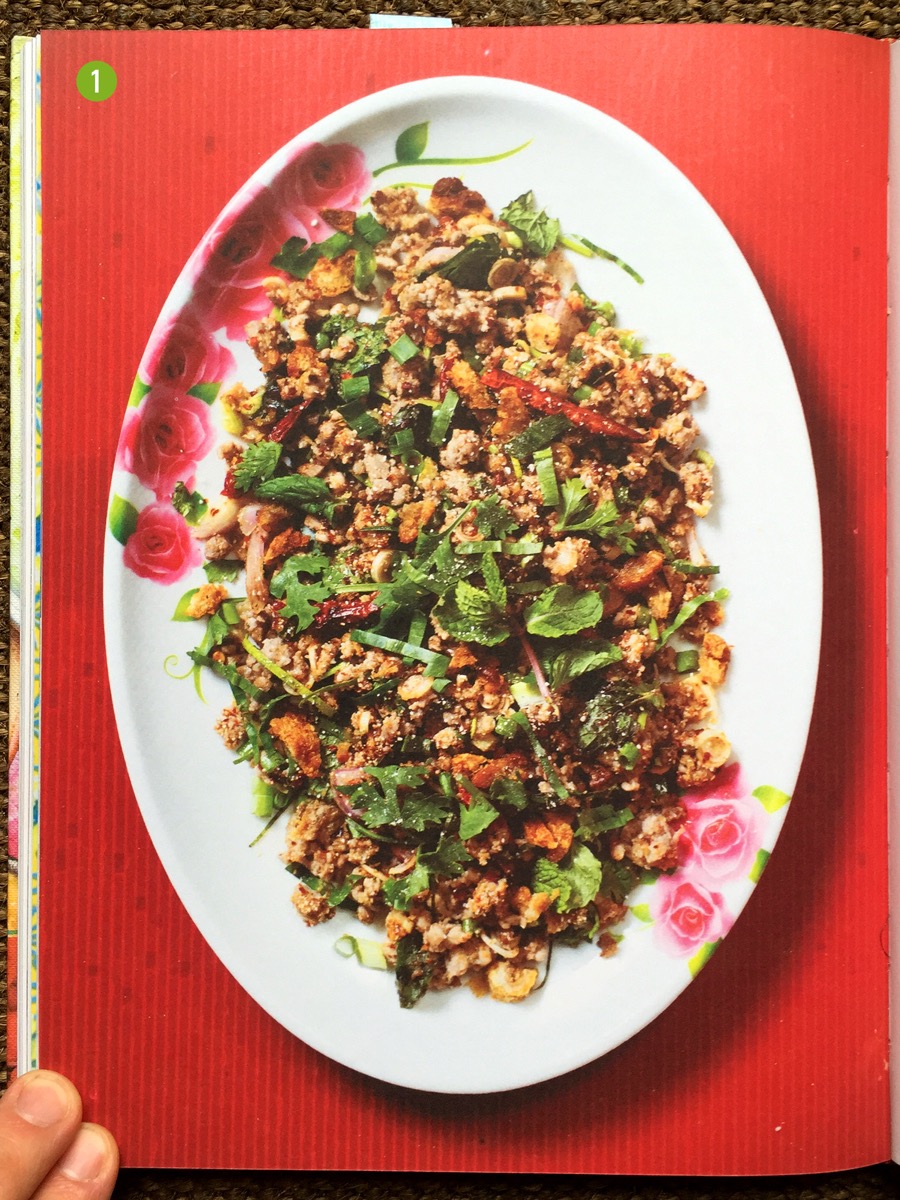
Let me point out some specific features here.
1. A large, appealing, instructive photo. I don’t necessarily fault cookbooks for not having photos—they’re a significant investment of time and money, and cookbooks aren’t always written by celebrity chefs. However, even those books that have photos often include them more for decoration than for any practical purpose. (A Malaysian cookbook I bought on the strength of its cover is loaded with attractive photos shot so close up, with such shallow depth of field, that it’s hard to tell what on earth they even depict. Is that a shrimp or a piece of papaya or a dish towel?) Pok Pok uses very no-nonsense, top down photos, suggesting not only the plating style, but the plate itself. Austin Bush’s photos in this book have inspired me to switch away from plain, understated dinnerware to colorful, often over-the-top melamine plates, found in most Asian markets—and the oilcloth tablecloths to put them on.
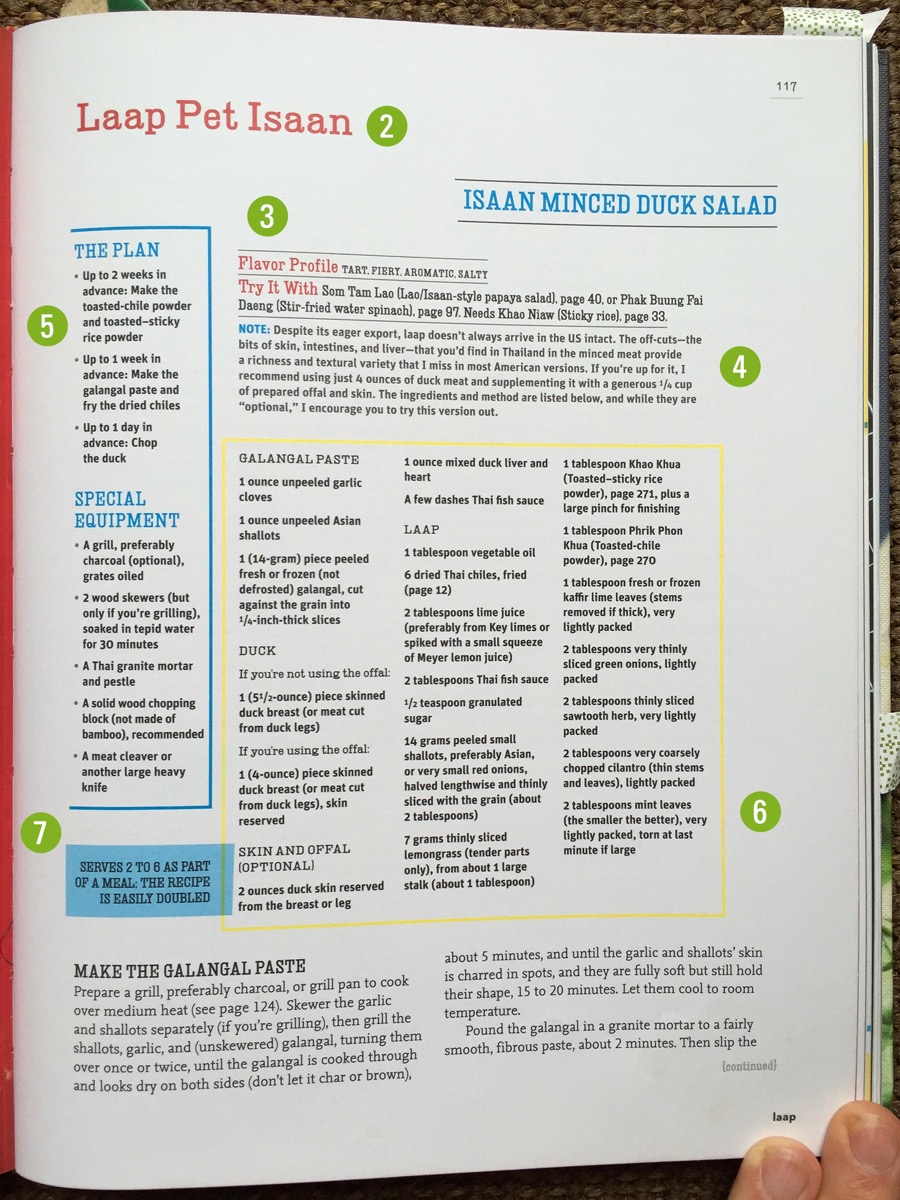
2. Bilingual dish name. This is useful because it gives you the original name which you can then google, spot on restaurant menus, etc., while also describing, in English, what the dish consists of. Andy uses a more academically accepted, more consistent spelling of Thai words than most restaurants (phat instead of pad, muu instead of moo). Another Thai cookbook I have includes only English translations of dish names, which confuses me to no end. What dish exactly is “stir-fried chicken with soy sauce”?
3. Flavor profile and meal suggestions. These are invaluable. They set your expectations for what kind of thing you’ll be eating, they guide your final seasoning, and they help you plan the rest of the meal. The variety of suggested accompaniments and the generic nature of the flavor profile also let you make informed substitutions when needed.
4. Recipe note. This is nothing new, but Pok Pok makes sure to include the note BEFORE the recipe even starts—not in the middle of it, or after you’ve already gone through the whole thing. Of course, you should definitely read the whole recipe before you begin, but it’s good to know any important disclaimers or warnings early on. And a discussion of the finer points of the recipe would be distracting in the body of it, when you’re trying to get to the next step. Don’t share an anecdote about your grandma right after you have me drop batter in the fryer.
5. The plan. I haven’t seen this in any other book, and it’s incredibly handy. Typically, with involved recipes, I outline something like this myself: first make the sauce and fridge it, then fry the crunchy topping, start the stew early in the morning, etc. Andy and JJ do all this for you, turning a potentially hair-pulling day of trying to cook four things at once into a chill few evenings spent with one component at a time. Bonus points for mentioning any required, less-than-usual equipment. Make sure your pot isn’t in the dishwasher, or in the garage.
6. Ingredients. Details that stand out to me here: the list is organized into sections; quantities are specified as precisely as possible (in grams or ounces, depending on the total weight); eyeball estimates are given as well (”about 1 large stalk”). With ingredients as powerful as Thai seasonings often are, precision provided by weight measurements can make a difference between a punchy salad and an inedible mess.
7. Serving size. Note that this is specified in terms of whether the dish is an entree or not, and whether you can scale it. In some cases, you’ll be warned not to double all the ingredients at once, because your cooking vessel won’t handle it. You just can’t stir-fry four people’s worth of food in a single wok.
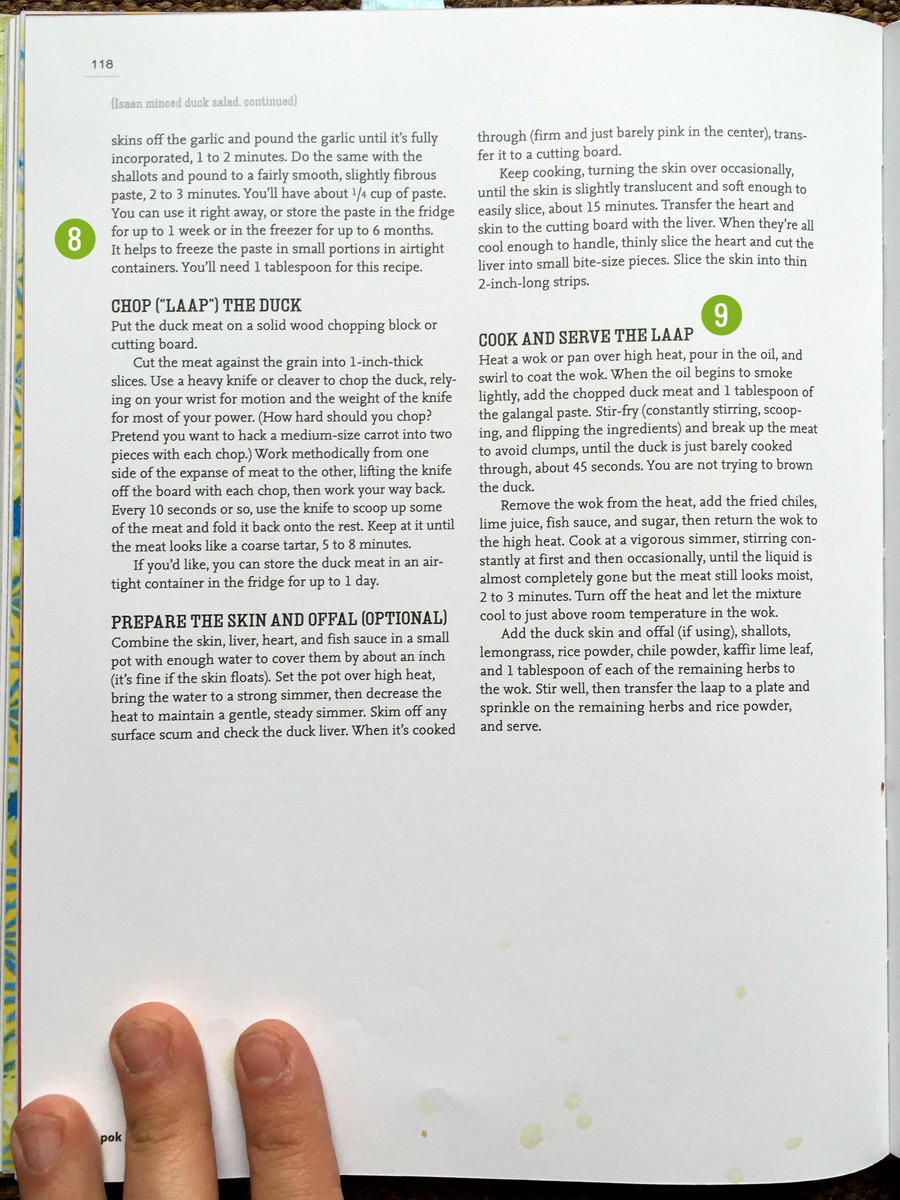
8. Storage. It should be legally required that cookbooks tell you how to store your finished dish or its components, and for how long. Pok Pok is very good at this; I’ve learned from it that I can freeze fresh chillies for months and keep fried shallots on the counter for a few days.
9. Recipe steps. The recipe is broken down not just into a stream of numbered steps, but into distinct, named sections. This matches my mental model of cooking the dish—a strategy this book generally aces.
(I tried very hard not to add a paragraph to this post where I go “UI designers can learn a lot from this cookbook blah blah” because I know you’re smart and you’ll conclude as much yourself. So pretend I never wrote this. Deal?)
If you buy Pok Pok, I strongly recommend that you grab a physical copy. While the ebook is about as well done as ebooks can be, that’s not saying much—the layout is still a bit all over the place on different devices, through no fault of the publisher. The printed book is pretty, filled with great recipes, and it’s an excellent assistant to you when you get down to cooking.